
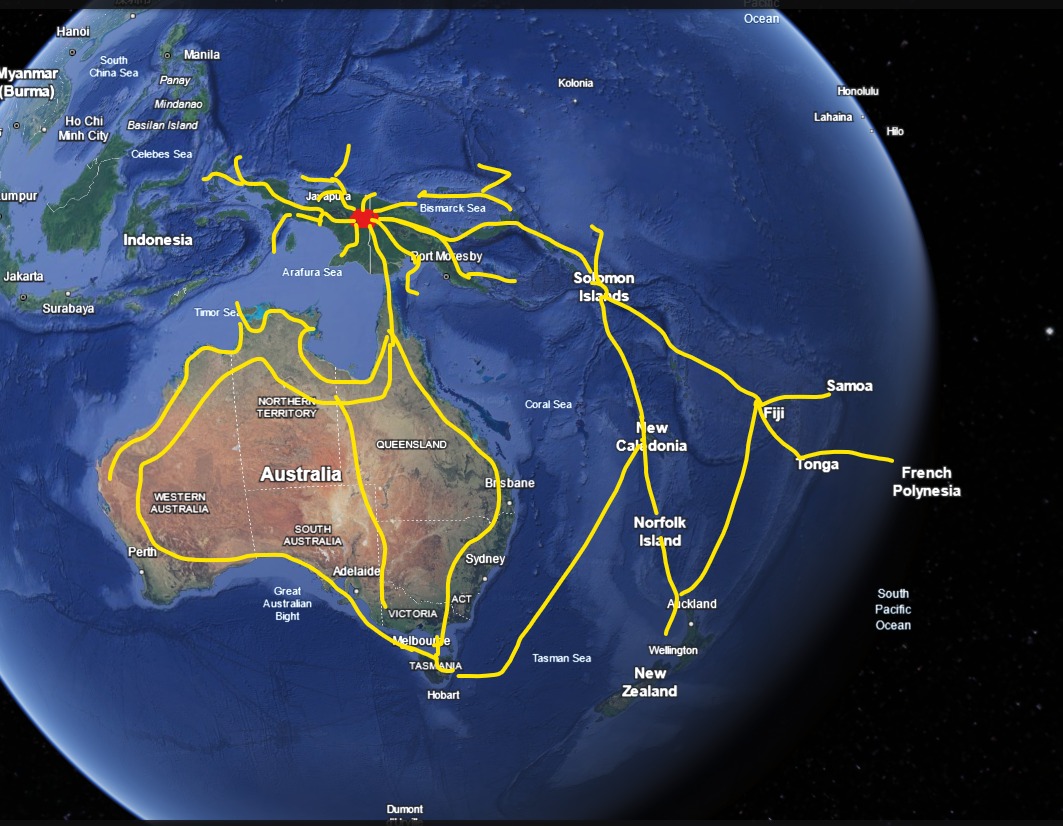
What Is Spirit-Led Conservation? At the ontological core of the framework lies Spirit-Led Conservation. It rejects dominant conservation paradigms that separate nature from culture, ecology from spirituality, and land management from moral obligation. Instead, it understands landscapes, waterscapes, and skyscapes as relational fields—realms where humans, ancestors, non-human beings, sacred places, and future generations are bound through reciprocal duties. Within this paradigm, forests, rivers, mountains, and sacred groves are not mere carbon stocks or environmental assets. They are living cultural-ecological relations that sustain identity, law, and social continuity. Conservation, therefore, is not reducible to technical resource management or ecosystem-service valuation. It is a form of relational governance grounded in customary law, sacred responsibility, and collective memory. This philosophy provides the normative foundation for everything that follows. Before any institutional design, before any legal codification or economic enterprise, the community must stand on the ground of its own spiritual and narrative authority.
Phase 1: Rebuilding the Sacred Foundation The first phase of the framework establishes epistemic and cultural legitimacy. Institutional reform is suspended until the community has recovered, documented, and reauthorized the cultural foundations through which land is known, narrated, governed, and protected. Cultural Topography: Mapping Spirit Hotspots Cultural topography reframes sacred-site mapping as an exercise in Indigenous spatial knowledge, cultural geography, heritage documentation, and rights-based territorial evidence. Communities identify spirit hotspots, ancestral places, ritual zones, story routes, customary boundaries, and ecological guardianship areas—the sites through which territory is socially, spiritually, and juridically constituted. The resulting map is a dual-purpose instrument. Externally, it translates immemorial territorial connection into a format legible to courts, planning authorities, conservation agencies, and advocacy networks. Internally, it preserves layered meanings, restricted knowledge, kinship obligations, and spiritual responsibilities that remain fully accountable to community protocols and customary authority. No sacred secret is flattened into a data point; what is revealed and what is held back is determined by the community alone. Story-Houses: Restoring the Living Library The Story-House takes the traditional Men’s House and reinterprets it not as a static cultural artifact, but as a living customary knowledge institution: an archive, a deliberative forum, a pedagogical space, and a governance centre all at once. Here, spatial knowledge, oral law, historical memory, ecological ethics, and political authority are stored, interpreted, contested, and transmitted across generations. Restoring the Story-House is both an infrastructural and an epistemological act. It recreates a community-controlled space for intergenerational knowledge transfer, deliberation, dispute resolution, and cultural pedagogy. In this sense, the Story-House functions as a counter-colonial institution that recentres Indigenous authority over knowledge production and social reproduction. Before the community speaks to the state, the market, or the donor, it must be able to speak to itself.
Phase 2: Modernizing Governance on Indigenous Terms With the cultural foundation restored, Phase 2 operationalizes that legitimacy. It translates customary authority into institutional forms capable of engaging state law, public administration, civil society, conservation finance, and sustainable markets—without displacing custom. The goal is legal and institutional pluralism: a condition in which customary authority can act strategically within external systems while remaining fully accountable to its own normative order. Codification of Customary Law Codification here is not the wholesale transcription of oral tradition. It is a selective, community-controlled process of juridical translation. Oral traditions, clan responsibilities, sacred prohibitions, land-use norms, dispute-resolution processes, leadership protocols, and consent procedures are documented in written form. This written law serves as a shield: it can be mobilized in dialogue with national legal systems, yet it draws its binding force from customary sources, not from state recognition. A codified framework of this kind strengthens the tribe’s capacity to contest land alienation, articulate procedures for Free, Prior, and Informed Consent, assert jurisdiction over customary territories, govern internal disputes, and engage state courts or administrative bodies as collective legal subjects. Crucially, the codified text remains an illustrative excerpt, not a replacement—customary authorities retain interpretive supremacy. Institutional Architecture: One Tribe, Four Tools The model’s institutional architecture is designed to differentiate—but never fragment—cultural authority, legal personality, political representation, and economic agency. Each instrument performs a distinct function while remaining subordinate to the tribe’s collective mandate and customary governance system. One Map Documents cultural topography, customary territory, sacred places, and ecological guardianship areas. Strategic value: land-rights evidence, planning authority, advocacy power, identity continuity. One Customary Law Codifies internal rules, spiritual obligations, consent processes, and governance protocols. Strategic value: a legal shield for self-determination, dispute resolution, and territorial jurisdiction. One NGO Acts as the political, diplomatic, legal, and donor-facing institution of the tribe. Strategic value: enables formal engagement with government, civil society, conservation partners, and international bodies. One Business Entity Operates sustainable economic activities consistent with customary values. Strategic value: generates revenue through culturally aligned enterprises while keeping commerce separate from cultural authority. This architecture solves a persistent problem: how to hold modern institutional tools without letting them colonize the inner life of the community. The NGO can negotiate with donors; the business entity can run an eco-tourism venture or explore culturally appropriate carbon opportunities; the map and the codified law can be tendered in court. But none of them can override the Story-House, the elders’ council, or the spiritual obligations that gave them birth.
Putting It All Together: The Operational Logic The framework follows a clear, sequenced logic. Each step builds on the one before it, moving from spiritual restoration to strategic institutional engagement.
- Document the sacred geography – identify and map spirit hotspots, ancestral sites, customary boundaries, and ecological responsibilities.
- Restore the knowledge institution – rebuild or renew Story-Houses as centres for teaching, governance, memory, and transmission.
- Codify customary authority – translate oral law into written customary law without removing its spiritual foundation.
- Formalize legal personality – establish the tribal NGO as the interface for advocacy, diplomacy, conservation finance, and rights protection.
- Create the economic engine – establish the business entity to pursue sustainable enterprises such as eco-tourism, non-timber forest products, cultural services, conservation finance, and carbon-related opportunities where appropriate.
- Govern development through consent – require all external engagement to follow community-defined procedures for consultation, consent, benefit sharing, and accountability.
What This Framework Makes Possible When implemented, the Spirit-Led Conservation Framework leads to a set of interlocking outcomes that reinforce one another:
- Cultural renewal: restored story systems, stronger intergenerational knowledge transfer, and renewed pride in identity.
- Legal empowerment: stronger standing to defend customary land, require consent, and engage state institutions.
- Governance modernization: customary authority equipped with recognized institutional forms without being absorbed by them.
- Economic agency: sustainable income generation through enterprises aligned with land, culture, and collective benefit.
- Conservation integrity: environmental protection grounded in sacred duty, customary law, and community guardianship.
- Self-determined modernization: strategic use of modern tools to navigate globalization on Indigenous terms.